Your electricity bill doesn’t explain itself. It tells you what you owe, not why the number keeps shifting, or what conditions upstream of your home determine whether your power stays on during a Phoenix heat event. For homeowners managing 3,000 square feet or more, that gap between what the bill shows and what’s actually driving it is worth closing — because the conditions shaping Arizona’s grid right now are not temporary.
Arizona has historically maintained one of the more reliable electric grids in the country. But reliability is a function of capacity relative to demand, and that equation is shifting. The combination of explosive data center growth, accelerating EV adoption, and summers that keep breaking temperature records is placing new stress on infrastructure that was built for a different era of consumption. Understanding what that means for your home is the first step toward doing something about it.
What’s Actually Happening to the Arizona Grid
Arizona has quietly become a major hub for data centers — facilities that power AI operations, cloud computing, and digital infrastructure at an enormous scale. The International Energy Agency projects that global electricity demand from data centers is on track to more than double by 2030. In a state already managing high baseline demand from residential and commercial cooling, that growth trajectory adds load to a system that isn’t expanding at the same rate.
Meanwhile, 2024 marked Phoenix’s hottest summer on record, according to the National Weather Service. That heat pushed millions of air conditioning systems into sustained high-demand operation simultaneously — exactly the scenario that stresses grid infrastructure most. When residential, commercial, and industrial demand all peak at once, the margin for reliability narrows. Arizona’s major utilities, APS and SRP, are working to address capacity constraints, but rapid demand growth and the time it takes to build infrastructure are creating challenges.
What “Behind the Meter” Actually Means
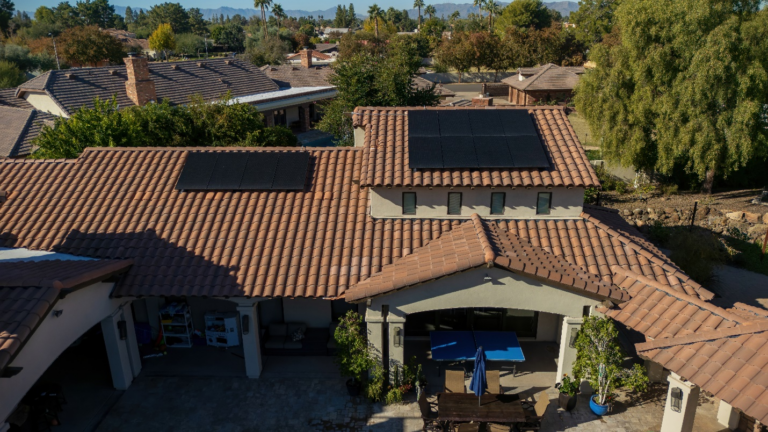
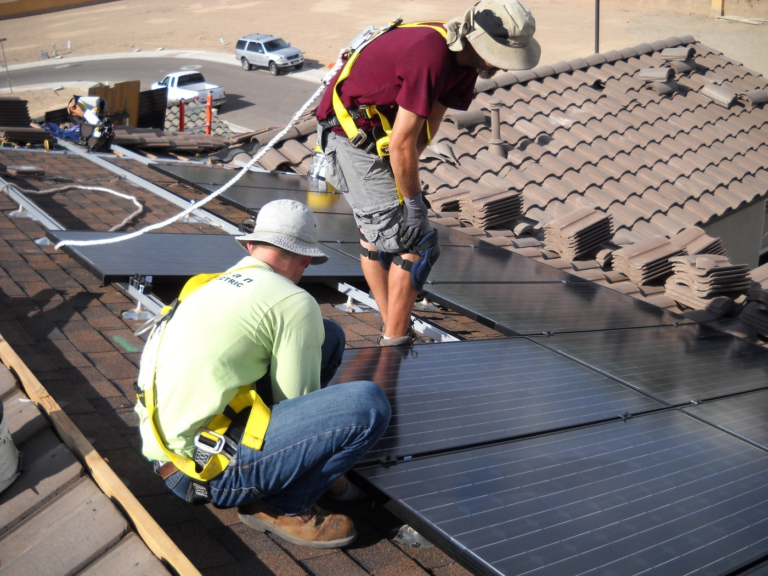
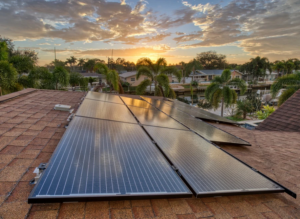
The phrase “behind the meter” refers to the energy systems that operate on your property — separate from the grid and responsive to your specific decisions. A properly designed solar system installation by a qualified solar energy company in Phoenix, Arizona, doesn’t just reduce what you draw from the grid. It creates a generation source that operates independently of upstream conditions. Even when the grid is under stress, your solar array continues to produce. When net metering policies shift — and they do shift, as Arizona’s regulatory environment has shown — a homeowner with a well-sized system has more insulation against those changes than one who remains fully grid-dependent.
For large homes in Maricopa County, this is particularly relevant. Higher consumption means higher exposure to rate changes and peak pricing. A home that generates a meaningful portion of its own electricity is a home with a buffer — not just against outages, but against the rate volatility that follows when grid demand consistently outpaces supply.
Want to understand exactly how your home sits relative to Arizona’s grid? Our team maps your home’s actual consumption profile and designs a solar system that addresses it directly. See how we approach residential solar design for Phoenix homes.
The Rate Trajectory Nobody Is Advertising
Utility rates in Arizona don’t move in isolation. They reflect the cost of building and maintaining infrastructure, managing fuel inputs, and recovering from peak-demand events. As grid pressure increases, the trajectory for residential rates trends upward. This isn’t speculation — it’s the documented pattern in high-demand markets across the Sun Belt, and Arizona is no exception.
Rooftop solar installers in Arizona who design properly sized systems give homeowners the ability to lock in a portion of their energy supply at the cost of installation rather than the utility’s ongoing rate. The longer that system operates, the more the gap between grid rates and fixed-cost solar generation widens in the homeowner’s favor. That’s not a marketing position — it’s arithmetic.
What Solar-Equipped Homes in Phoenix Are Doing Differently
The Phoenix homes least exposed to grid volatility share a few characteristics. They have solar systems designed for their actual consumption profile, not an average household. They’ve considered storage, so peak-evening demand — when solar generation drops but cooling demand remains high — is covered. And they worked with a local solar company in Phoenix, AZ, with sufficient experience to design systems that account for Arizona’s specific grid structure, net metering dynamics, and climate conditions.
For more on the state of Arizona’s grid and what’s driving current demand pressure, the Utility Dive analysis of Arizona’s renewable energy policy shifts provides context worth reading. The U.S. Department of Energy’s rooftop solar potential analysis also outlines the structural case for residential solar generation at scale.
Take Control of What’s Behind Your Meter
We’ve been helping Phoenix homeowners understand their energy picture for 25 years. If you want to know exactly where your home stands — what you’re consuming, what a solar system would generate, and how that changes your exposure to grid conditions — we’re ready to walk you through it. Schedule your energy consultation with American Solar & Roofing today.