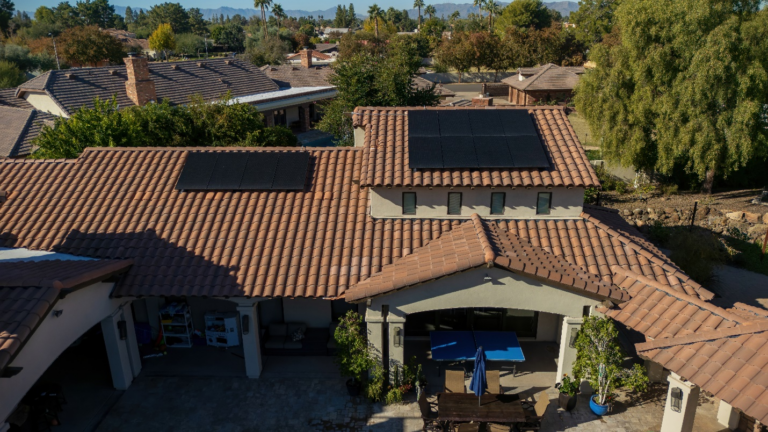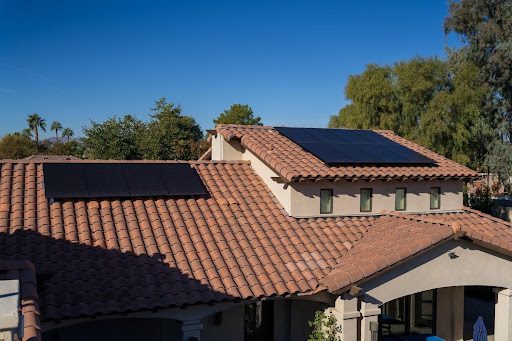

At some point, most Phoenix homeowners face two conversations within a few years of each other: the roof is aging and needs attention, and solar makes sense for a home this size. The instinct is often to handle them separately — replace the roof now, add solar later, or get the solar up and running and deal with the roof when it demands it. Both approaches are understandable. Neither is optimal.
The case for doing both at the same time isn’t built on convenience alone. It’s built on how these two systems relate to each other structurally, technically, and over time. When the roof replacement and the solar installation are planned and executed together, the result is a more coherent system, better warranty coverage, and a home that performs the way it was designed to — without the complications that come from misaligned timelines.
The Structural Relationship Between Roof and Solar
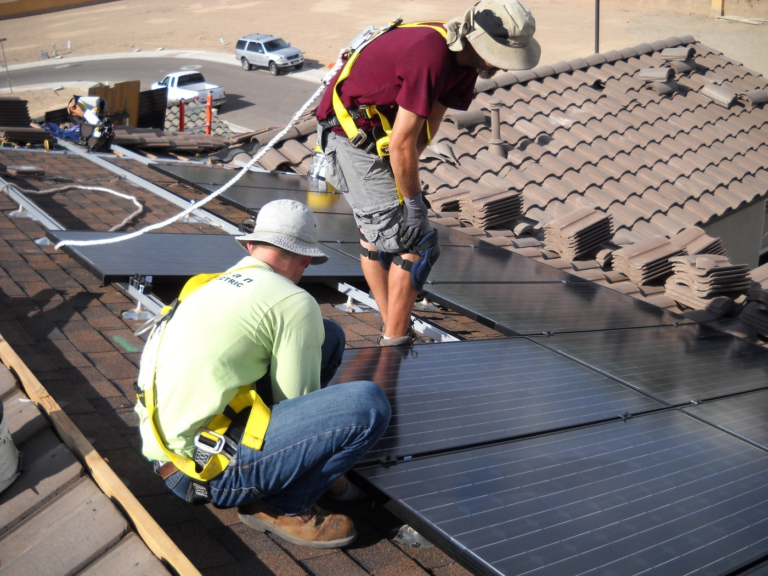
A rooftop solar array doesn’t sit on top of a roof — it anchors into it. Mounting hardware penetrates the decking and attaches to the structural members beneath, such as rafters, trusses, and framing. The condition of those structural elements determines not only whether an installation is feasible, but also how well the mounting points hold over the 25 to 30-year life of the system.

Solar and roofing contractors in Phoenix, AZ who assess a home for a combined installation evaluate the roof as a complete system — not just surface condition, but the structural integrity that will support the array long-term. A new roof installed with solar in mind is built differently from a standard replacement. Underlayment choices, flashing details, and decking repairs all account for what’s coming next. That coordination doesn’t happen when separate contractors handle the two projects in separate years.
Why Sequencing Matters
Installing solar on a roof with 8 to 10 years of remaining life creates a predictable problem: before your solar system reaches the midpoint of its performance curve, you’ll need to remove it, replace the roof, and reinstall it. Most solar warranties don’t cover that removal and reinstallation. It’s a separate project, with its own labor costs, scheduling complexity, and risk of disrupting a system that had been operating cleanly.
The U.S. Department of Energy notes that solar panels and roofing systems have nearly identical lifespans — approximately 25 to 30 years each. That alignment isn’t a coincidence. It’s the design case for tackling roof replacement with solar in Phoenix, AZ, as a single integrated project. When both systems start fresh at the same time, they age together, allowing the homeowner to avoid the disruption of misaligned replacement cycles entirely.
Thinking about your roof and solar at the same time? That’s exactly the right instinct. Our team specializes in coordinating both projects from assessment through installation, so nothing gets left to chance. Learn more about our combined roof and solar services.
Warranty Alignment and Long-Term Protection
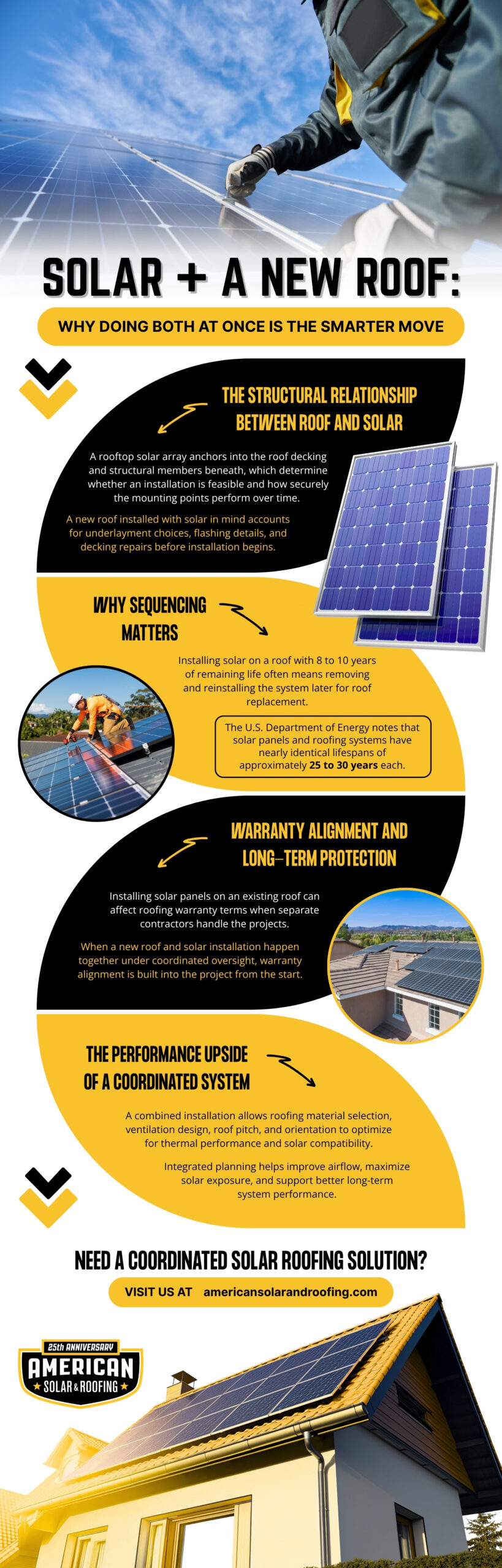
One of the less-discussed advantages of a combined installation is its impact on warranty coverage. Roofing warranties carry specific conditions around what can be installed on the roof surface and how. In some cases, installing solar panels on an existing roof — particularly by a contractor different from the original installer — can affect the terms of the roofing warranty. When a new roof and solar installation in Phoenix, AZ happen together under coordinated oversight, warranty alignment is built into the project from the start.
The same applies to the solar installation warranty. Mounting hardware performance is partly a function of what it’s anchored into. A new roof, with fresh decking and intact structural members, gives the solar hardware the foundation it was designed to work with. That matters most not at installation, but five, ten, and fifteen years later, when the quality of those anchor points determines whether the system continues performing without issue.
The Performance Upside of a Coordinated System
Beyond structural and warranty considerations, a combined installation opens up performance decisions that aren’t available when the two projects are treated separately. Roofing material selection can optimize for thermal performance and solar compatibility simultaneously. Ventilation design can account for airflow beneath the array. Roof pitch and orientation can be evaluated through the lens of maximizing solar exposure. These aren’t minor details — for a large Phoenix home, they’re meaningful contributors to how well the entire system performs over its lifespan.
The U.S. Department of Energy’s guidance on combining roof replacement and solar installation clearly makes the case for coordination, and NREL’s analysis of rooftop solar potential across U.S. residential properties contextualizes why integrated planning matters at scale. For individual homeowners, the implication is straightforward: doing both at once produces a better outcome than either project done alone.
What to Look for in a Combined Project
Not every contractor is equipped to manage both sides of this project with equal competence. The firm handling your solar roof installation in Phoenix, AZ, needs to understand roofing, and the firm managing your roof replacement needs to understand what’s coming when the solar crew arrives. The cleanest version of this project is one managed by a contractor with genuine expertise in both — someone who has done this integration enough times to know where the complications arise and how to design around them from the beginning.
For large homes across the East Valley and West Valley, this coordination isn’t a nice-to-have. It’s the difference between a system that performs consistently for 30 years and one that creates avoidable disruption somewhere in the middle of that window.
One Project. One Team. Done Right.
American Solar & Roofing has been handling integrated roof and solar installations across the Phoenix metro for 25 years. If your roof is aging and solar is on your radar, this is the right time to bring both conversations together. Our team will assess your home, design a system that accounts for both projects from the ground up, and manage the installation with the coordination that kind of work demands. Tell us about your home, and let’s build a plan.