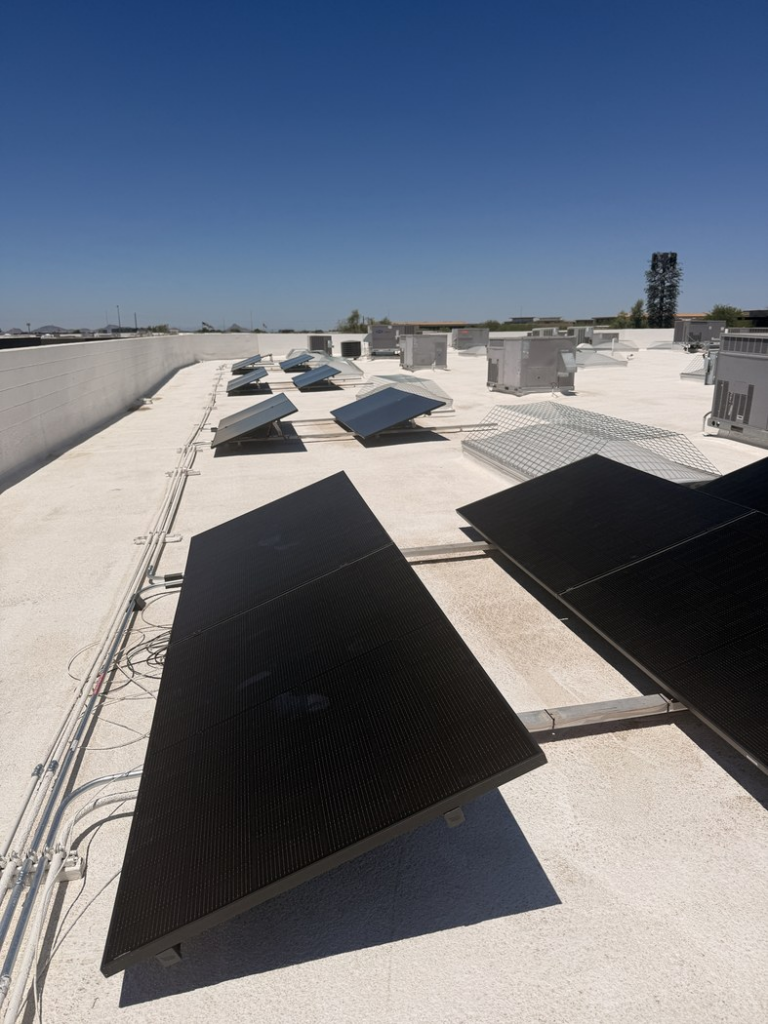
When business owners evaluate commercial solar, the conversation almost always starts with panel count and projected savings. Those numbers matter, but they skip over the single most important factor in whether a commercial solar project succeeds: the roof it sits on. A flat commercial roof is a completely different animal from a residential one, and the condition, material, and design of that roof determine whether your solar investment performs for decades or becomes a maintenance nightmare. The businesses that get commercial solar right are the ones that start with the roof, not the panels.
A successful commercial solar installation in Phoenix, AZ depends on roof readiness that most proposals gloss over entirely. Solar is the catalyst of a modern home, and the same principle scales up to commercial buildings — the roof is the platform that determines everything above it.
Roof Material and Membrane Condition
Most commercial buildings have flat or low-slope roofs covered by a membrane — TPO, EPDM, modified bitumen, or similar. That membrane is what keeps water out, and its condition is critical before any solar goes on top. Installing a system over an aging membrane means you’ll eventually have to remove the array to replace the roof, a hugely expensive disruption. A solar and roofing company in Phoenix, AZ that handles commercial work evaluates membrane condition and remaining life before recommending anything. This is exactly the kind of assessment a panel-focused installer skips — and business owners pay for later.
The U.S. Department of Energy’s guidance on commercial rooftop solar emphasizes evaluating roof condition and structural readiness as the foundation of any commercial project. When you upgrade your building with solar, the membrane beneath the array is what protects both the roof and the investment on top of it.
Drainage and Ponding Water
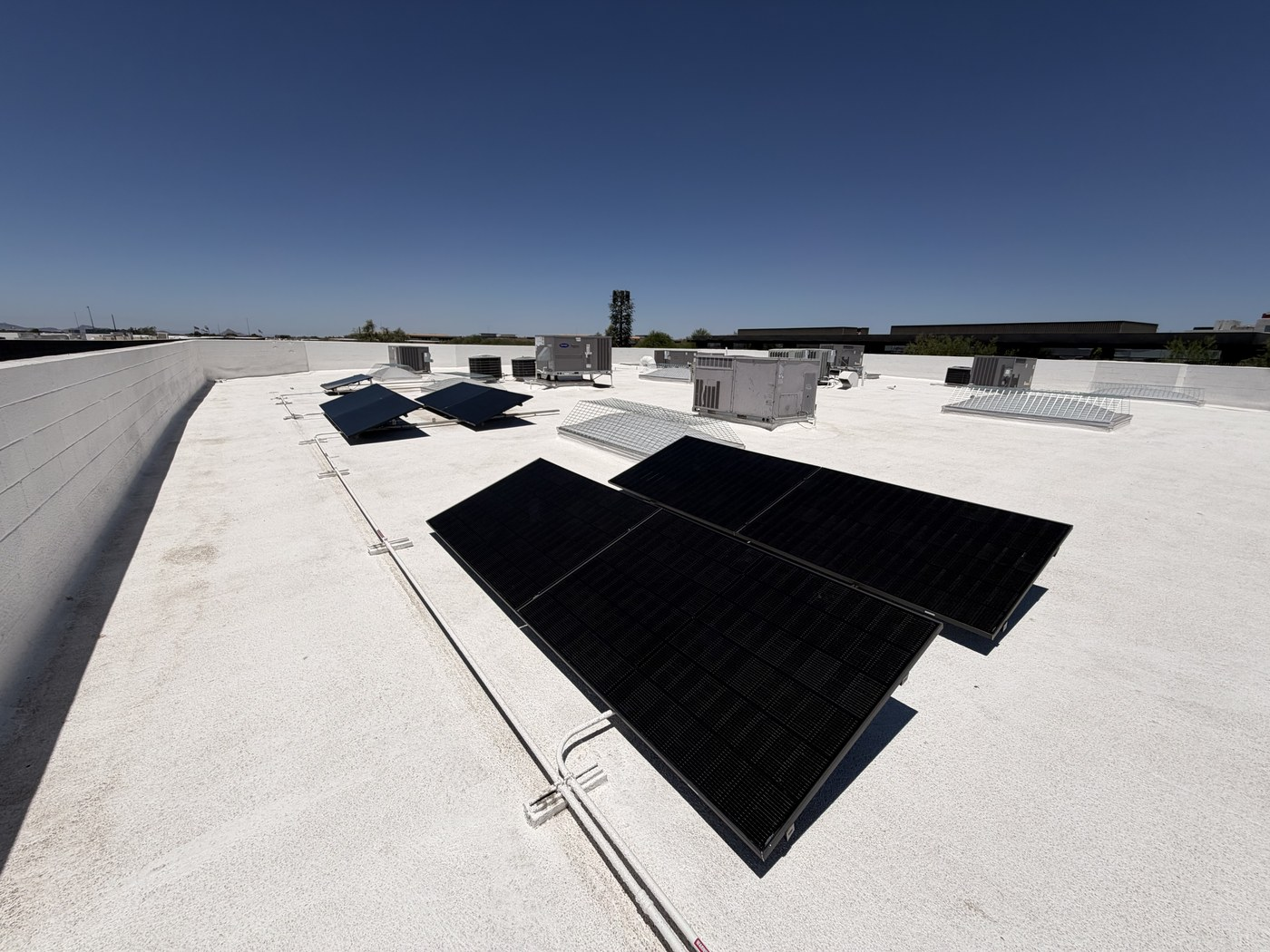
Flat roofs don’t shed water the way pitched roofs do, which makes drainage a critical design factor. Poor drainage leads to ponding water, which degrades the membrane and can compromise a solar installation. A well-planned solar panel installation in Maricopa County, AZ accounts for how water moves across the roof and ensures the array doesn’t interfere with drainage paths or create new ponding areas. Experienced solar and roofing contractors in Phoenix, AZ understand that a commercial array and the roof’s drainage have to be designed together, not in isolation.
This is another area where dual roofing and solar expertise proves essential. American Solar & Roofing evaluates drainage as part of every commercial assessment — see how we approach commercial projects. Live life your way as a business owner, confident that your roof and your solar were planned as one system.
Penetrations and Structural Readiness
Every mounting point on a commercial solar system is a penetration through the membrane, and every penetration is a potential leak if it isn’t flashed and sealed correctly. On a large commercial array, that can mean hundreds of penetrations, each of which must be handled with roofing-level precision. This is where a solar roof installation in Phoenix, AZ backed by genuine roofing expertise dramatically outperforms a panel-only approach. Structural readiness matters too — the roof must carry the array’s weight and wind loads safely for decades. Skipping the structural assessment is how commercial projects run into trouble.
The National Renewable Energy Laboratory’s research on commercial solar documents how roof-related factors shape the long-term performance and cost of commercial systems. A solar energy company in Phoenix, Arizona, that treats the roof as the foundation delivers a project that performs, while one that treats it as an afterthought creates problems that surface years later.
Why the Roof-First Approach Wins
The businesses that see the best returns on commercial solar are the ones that partnered with a contractor who evaluated the roof first, addressed any issues, and then designed the array around a sound foundation. That sequence — roof, then solar — prevents the expensive surprises that plague projects built the other way around. A top-rated solar and roofing company in Phoenix, AZ brings this discipline to every commercial installation, protecting both the building and the investment. The same principle applies whether you upgrade your home or your business — the roof comes first.
For business owners, the takeaway is clear: don’t let a proposal that’s all about panel count distract you from the roof underneath. Ask about membrane condition, drainage, penetrations, and structure before you talk about panels. Solar powers your lifestyle at home and your bottom line at work — but only when the roof beneath it was ready. Upgrade your building with a partner who starts where success actually begins.
Start Your Commercial Solar Project the Right Way
Before you evaluate panels, let us evaluate your roof. We’ll assess membrane condition, drainage, and structure so your commercial solar investment performs for decades. Talk to our commercial team today.