It happens at every neighborhood barbecue in the Valley. Someone mentions they just went solar, someone else asks what they paid, and suddenly three households are recalibrating their entire energy strategy around one data point from a house they’ve never seen the utility bills for. It’s a natural instinct — and it’s completely useless. Your neighbor’s quote tells you almost nothing about what your home needs, and treating it as a benchmark is one of the most common ways homeowners end up with the wrong system.
The uncomfortable truth is that solar panel installation in Maricopa County, AZ is one of the least comparable purchases two neighbors can make. Homes that look similar from the street diverge wildly where it matters: consumption, roof geometry, shading, electrical capacity, and how the family actually lives. Solar is the catalyst of a modern home — but a catalyst formulated for someone else’s home does nothing for yours.
Same Street, Completely Different Energy Realities
Start with consumption — the foundation of every system design. Two 3,500-square-foot homes side by side can have monthly usage that differs by 50% or more. One family runs a pool pump year-round, charges two EVs overnight, and keeps a casita conditioned for guests. The other travels half the year. The U.S. Energy Information Administration’s residential energy consumption data shows just how dramatically household usage varies even within identical housing stock. A system sized for one of these households would be badly wrong for the other — and the quote that priced it is irrelevant across the property line.
A quality residential solar installer in Phoenix, AZ starts with twelve months of your actual utility data, not an assumption based on square footage. That’s the difference between a system built around your life and one built around an average that describes nobody. When you upgrade your home, the design should reflect the way you actually live in it.
Roof Geometry Changes Everything
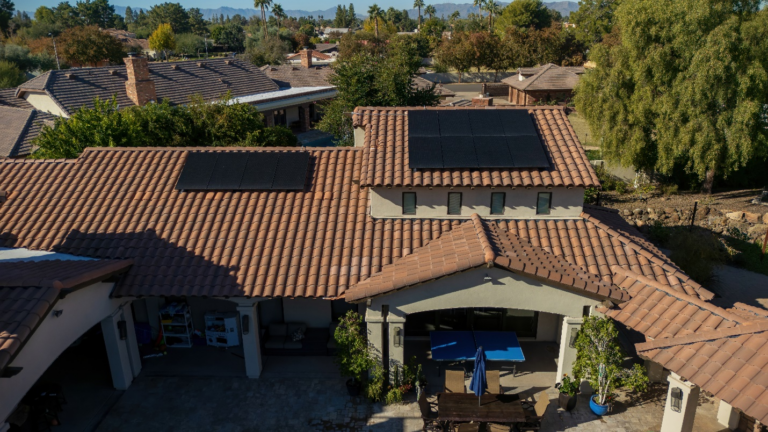
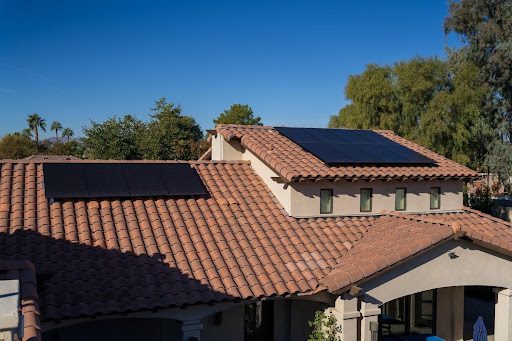
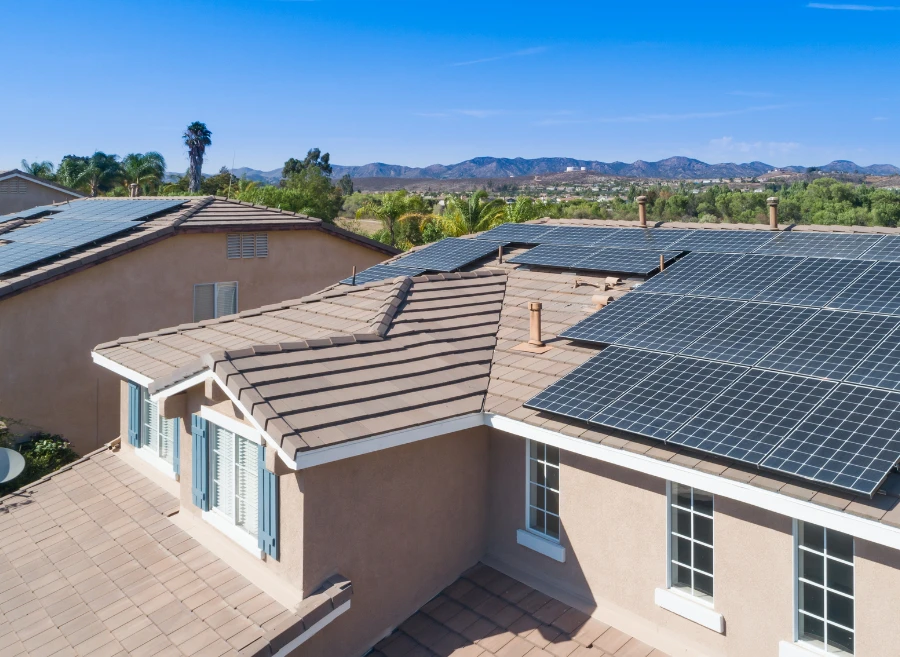
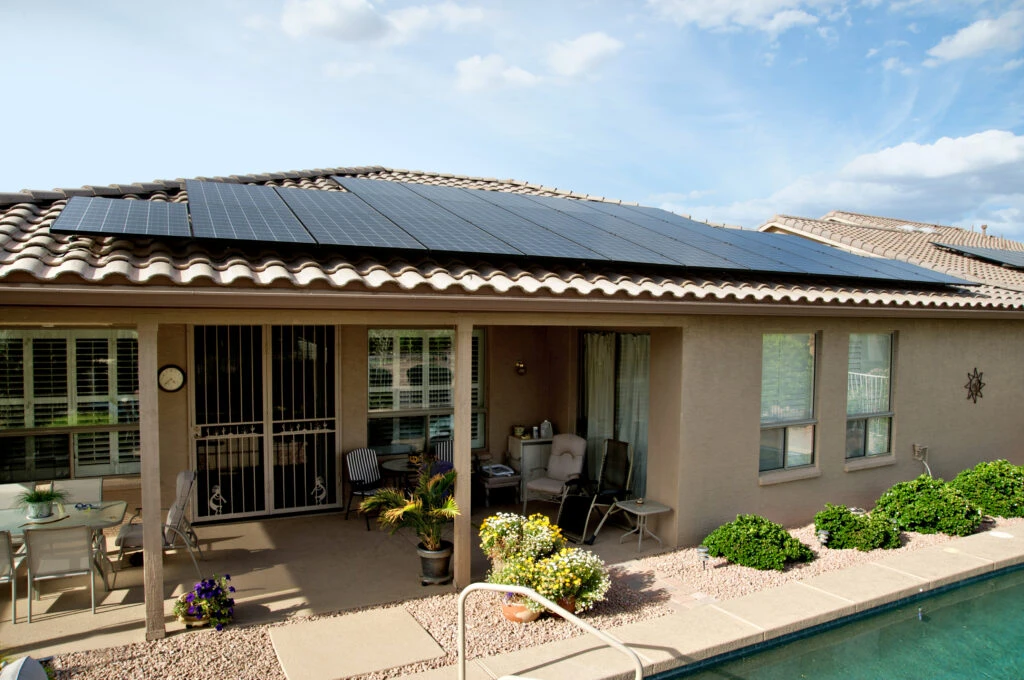
Now look up. Your neighbor’s roof might face south with a single clean plane at the ideal pitch — solar gold. Yours might be a handsome architectural composition of hips, valleys, and dormers that looks fantastic from the curb and complicates every array layout decision. Panel count, placement, inverter strategy, and final production all shift with roof geometry, and no two custom homes in the Valley share it. Solar and roofing contractors in Phoenix, AZ who understand both disciplines can optimize a complex roof beautifully — but the resulting system, and its price, won’t match the simple gable next door.
Shading adds another layer. A mature mesquite on the west side, a neighbor’s two-story addition, even a parapet wall can carve meaningful production out of specific roof zones at specific hours. The National Renewable Energy Laboratory’s PVWatts calculator methodology demonstrates how sensitive production estimates are to orientation, tilt, and shading inputs — variables that are unique to every single roof.
At American Solar & Roofing, we design every system from your roof’s actual geometry and your home’s actual load — never from a template or a neighborhood average. If you want to know what your home specifically needs, our residential solar team will map it for you.
The Electrical Story Behind the Walls
Here’s the variable nobody sees at the barbecue: the electrical panel. One home has a 400-amp service with room to spare; the identical-looking home next door has an original 200-amp panel already running near capacity. That difference alone can change project scope significantly — and it’s invisible until a licensed solar installer in Phoenix, AZ opens the panel and looks. Quotes that don’t account for electrical readiness aren’t comparable to ones that do, and homeowners comparing the two are comparing apples to wiring diagrams.
What Actually Deserves Comparison
None of this means homeowners shouldn’t shop carefully — it means they should compare the right things. Compare the thoroughness of the assessment: did the contractor pull your usage data, walk your attic, and analyze your shading, or did they quote from a satellite photo? Compare warranty terms, workmanship coverage, and how long the company has actually operated in Arizona. Compare whether the design anticipates your next decade — EV charging, battery storage, that pool you keep talking about. A top-rated solar and roofing company in Phoenix, AZ welcomes that scrutiny, because process is where quality lives. Live life your way — with a system designed for your way, not your neighbor’s.
The quote itself is the last thing worth comparing, because it prices two different scopes for two different homes. Solar powers your lifestyle when the system was engineered for that lifestyle specifically. Anything else is someone else’s solution at someone else’s price — and neither belongs on your roof.
Get a Design Built for Your Home — Not the Neighborhood Average
We’ve spent 25 years designing solar systems around the specific homes they serve. Bring us your utility data and your roof, and we’ll show you exactly what your home needs — no benchmarks, no assumptions. Start your custom assessment with us today.